Let’s Talk about Aliens

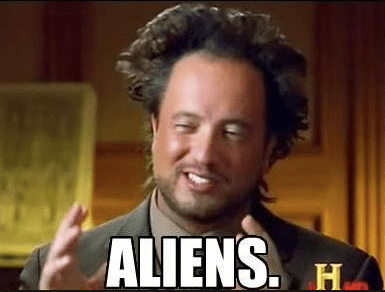
Ancient Aliens | Know Your Meme

I don’t know about you, but thinking of aliens brings up images of UFOs and bright green skin, bulbous heads and an echo of “Take me to your leader.” However, this representation of extraterrestrial life is simply something made up by Hollywood and pop culture. As far as we know, Earth has never been visited by a species from another planet, solar system or galaxy (regardless of what History Channel says). However, several scientists have argued that there is a high probability for the existence of extraterrestrial life, in spite of the lack of evidence. Let’s talk through why we think aliens could be there, and possibly why we haven’t met them yet.

Most people regard the issues of aliens as something antithetical to science, but scientists have been studying, thinking, and calculating the probability of extraterrestrial life for years. One of the most important arguments for the existence of aliens was presented by Italian physicist Enrico Fermi in 1950. He postulated that any civilization with some rocket technology and an imperial desire could easily colonize the galaxy, yet the paradox is that we have no evidence that this has happened even though it seems fairly simple. The Search for Extraterrestrial Intelligence Institute said of the Fermi paradox:

Within ten million years, every star system could be brought under the wing of empire. Ten million years may sound long, but in fact it’s quite short compared with the age of the Galaxy, which is roughly ten thousand million years. Colonization of the Milky Way should be a quick exercise.

Another astronomer who approached the thought of aliens was Dr. Frank Drake, an American radio astronomer. He created an equation, known simply as the Drake Equation, to calculate the probability of technological civilizations.
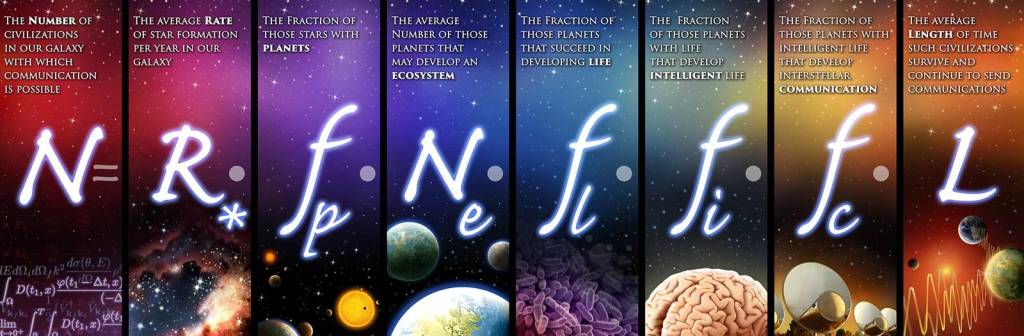
SETI – Drake Equation

This equation is famous, but there are difficulties in using it. Some of the parameters, such as planets that develop intelligent life with interstellar communication, won’t be measurable until we actually discover these civilizations. Which, unfortunately, isn’t reality yet.

The fairly recent development of astronomers’ ability to detect exoplanets has also fueled the fire to find alien civilizations. There are thousands of confirmed planets in other solar systems, and definitely thousands more. Our current techniques for finding exoplanets places emphasize finding Jupiter-like planets at Mercury-like distances, so scientists have not been able to easily find Earth-like planets yet. However, as exoplanet discovery improves there is much possibility for finding other Earths, and with that possibly other life forms.

With the ideas of Fermi and Drake and the discovery of exoplanets, it seems like a strong case for the existence of aliens. However, Michael Hart, an American astrophysicist, responded to Fermi’s idea in 1975 with the hypothesis that maybe intelligent life just isn’t out there. While he did say more research was needed into astrobiology and planet formation to confirm anything, he discussed four arguments that could answer Fermi’s paradox.

  1. Aliens never came because space travel is not possible for them
  2. Aliens chose not to come to Earth
  3. Advanced civilizations developed too recently and aliens have not had time to reach us yet
  4. Aliens visited Earth in the past without observation

Other more recent responses to Fermi’s paradox hypothesize that Earth formed fairly early in terms of the universe for a habitable planet. Most of the elements needed to create planets that support life are still out in the universe and have been increasing in the 4.6 billion years since Earth’s birth. Supporting Hart’s argument that advanced civilizations developed too recently, Earth would be one of the first advanced civilizations rather than being in the middle of pack.

Another response was the argument that terrestrial planets can support life, but often not for very long (in space terms at least). Think Venus and Mars, for example. Before the run-away greenhouse effect and the loss of the atmosphere respectively, these planets could have supported life. This was a short gap of a couple hundred million years where life could have existed, but we would never know because it is all wiped out by now.

Arguments about the possibility of extraterrestrial life are plentiful, but the reality is that we will never know the truth until we either find another civilization or expand enough to confirm we are truly alone. The one prediction I’m betting on though? Bright green skin is and will always be just a Hollywood fabrication.

Sources: Fermi Paradox: Where are the Aliens?, SETI Drake Equation, SETI Fermi Paradox
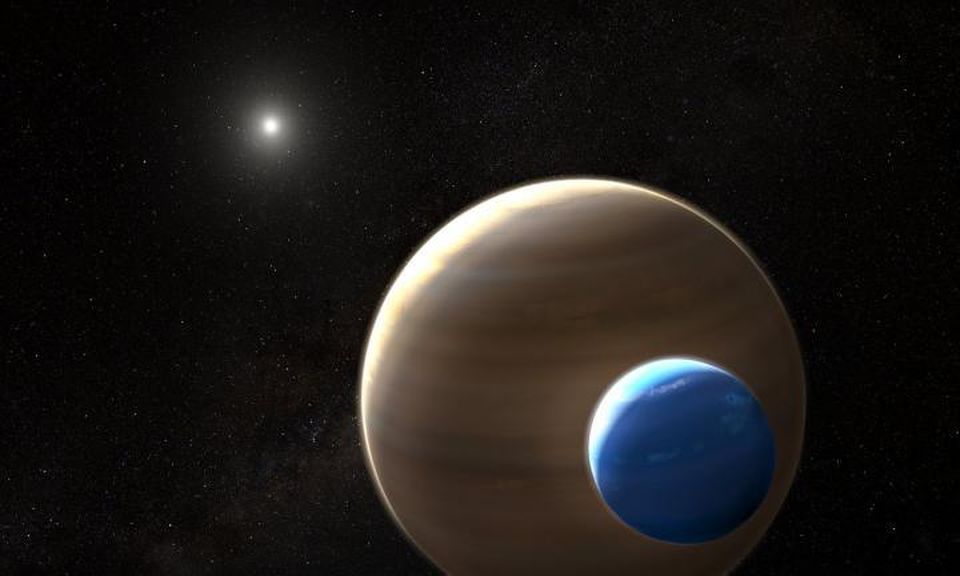
What do we know about exomoons?

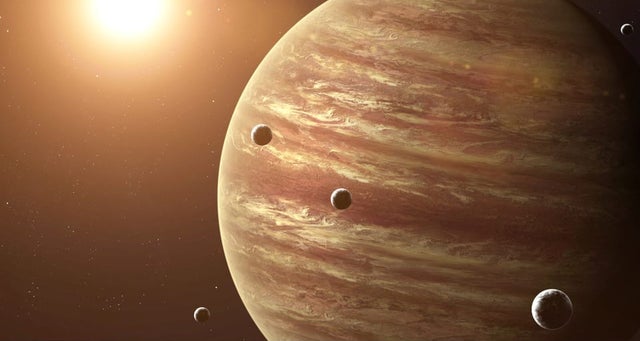
Artist’s depiction of an exomoon candidate

Unfortunately, this question has an easy answer: not much. So far, no exoplanet has been confirmed to have a moon, even though scientists are detecting planets the size of the Jovians. Even though nothing has been confirmed, however, there have been some interesting potential discoveries. We say potential because again, the systems are so far away it is hard to confirm anything.

One astronomer from the University of Padua in Italy, Cecilia Lazzoni, claims she found two giant exomoons. In both cases, the planets are about 11 to 13 times as large as Jupiter, and their moons are around Jupiter size. The question is if these systems can even be understood as planets and their orbiting moons. Some say these planets could be classified as brown dwarfs, objects that can only complete half of the proton-proton chain and thus don’t achieve star status. Brown dwarfs are normally classified as 13 times as large as Jupiter, but the definition is completely clear. If the object is a brown dwarf, then the moon could actually be a planet. Another explanation for these systems could be calling them binary planets, similar to the idea of binary stars.

Other researchers from Columbia University claim to have evidence of an exomoon that is around Neptune size, orbiting around a planet several times as large as Jupiter.

This kind of discovery is exciting because, even if they aren’t called exomoons but end up being planets, they force us to expand how we classify and think of extrasolar systems. Additionally, similar to how astronomers consider Europa and other Jovian moons as possibilities for containing life, some consider exomoons as candidates for life outside our solar system. Dr. Phil Sutton from the University of Lincoln said,

“These moons can be internally heated by the gravitational pull of the planet they orbit, which can lead to them having liquid water well outside the normal narrow habitable zone for planets that we are currently trying to find Earth-like planets in…I believe that if we can find them, moons offer a more promising avenue to finding extra-terrestrial life.”

Exactly like our Jovian moons! So although exomoons might offer possibilities outside of what we know about our own solar system, we can still apply the knowledge we find in our solar neighborhood to other systems far, far away.

Sources: Have Astronomers Detected Exomoons at Last?, Exomoons May Be the Best Place to Search for Life

How do we name our Solar System?

Image from an IAS Article Celebrating the Winner of an IAU Prize

We all remember learning the mnemonic device in elementary school: My Very Excellent Mother Just Served Us Noodles (or whatever variation you prefer). Mercury, Venus, Earth, Mars, Jupiter, Saturn, Uranus, and Neptune, the eight planets of our solar system. But what do these names actually mean? How do planets and moons and other stuff in our solar system even get their names? And what about the various mountains and crevices on the actual planets, do those features get names?

Of course, all languages have their own names for the planets and their moons, but when discussing the official scientific names we must turn to the IAU. The job of the International Astronomical Union is ” to promote and safeguard the science of astronomy in all its aspects,” including the official names of all things in space. In their terms, “unambiguous astronomical nomenclature.”

There are a few steps on deciding on these official names, and it all starts with the discovery of the moon or feature. Once the thing-to-be-named is properly confirmed to exist, several names are considered by a Task Group. Names successfully reviewed by the Task Group move onto the Working Group for Planetary System Nomenclature (WGPSN). If the WGPSN gives the final approval for the name, it is immediately entered in the Gazetteer of Planetary Nomenclature, the official reference for all solar system names.

Let’s take a short flip through of the Gazetteer and dive into some planetary naming.

NASA Solar System Image Gallery

Mercury – named after the Roman god of commerce, travel, and thieves because it moves so fast across the sky. Mercury has no moons. Themes for naming planetary features include abandoned cities, words for “snake” and “hot” in different languages, and significant works of architecture.

Venus – named after the Roman goddess of love and beauty, because it is the brightest and most beautiful planet. Venus also has no moons. Themes for naming planetary features include different types of goddesses, mythological heroines, and women who have made outstanding contributions to their field.

The Moon – in other languages it is known as Luna, Lune, Mond, and Selene. The Moon is Earth’s satellite. Themes for naming features on the Moon include significant cosmonauts, astronomers, and scientists, as well Latin terms for weather and other abstract concepts. Although the Moon has the most well-developed nomenclature since it is the easiest to study, only twenty eight craters on the Moon are named for women out of the 1586 craters. For more information on this disparity and these remarkable women, I would recommend reading The Women of the Moon by Daniel R. Altschuler and Fernando J. Ballesteros.

The SETI Institute

Mars – named for the Roman god of war, appropriate for the striking red planet. Mars has two moons, Phobos and Deimos (fear and panic respectively). These are the names of the mythological horses which pulled Mars’ chariot. Themes for naming planetary features include names from classical mythology, names of rivers, and small towns and villages of the world. Features on Phobos are named after scientists who studied these two moons and people/places from Gulliver’s Travels by Jonathan Swift. Features on Deimos are named after authors who wrote about the Martian satellites.

Jupiter – named after the Roman King of the gods, the god of sky and thunder, which is an appropriate name for the largest planet in our solar system. Jupiter has 79 moons, which are all named after the mythological children of Jupiter. Themes of the features on the satellites include:

  • Io – heroes and gods related to fire, sun, and volcanoes, mythical blacksmiths, and people/places from Dante’s Inferno
  • Europa – gods, heroes, and places from Celtic myths, as well as Celtic stone rows
  • Ganymede – gods and heroes of the ancient Fertile Crescent civilization, places from Egyptian myths, and astronomers who discovered Jovian moons
  • Callisto – all names are drawn from myths and stories of cultures of the Far North, such as Norse, Inuit, Sami, etc.
Shutterstock photo from a Derry Journal Article

Saturn – named for the Roman god of wealth and agriculture. In Greek mythology, Saturn’s equivalent is the father of Jupiter’s Greek equivalent. Saturn has 82 moons, which are named after Greek giants, titans, and titan descendants. Themes of the features on some of the satellites include:

  • Mimas – people/places from Le Morte d’Arthur legends
  • Enceladus – people/places from Burton’s Arabian Nights
  • Tethys – people/places from Homer’s Odyssey
  • Dione – people/places from Virgil’s Aeneid
  • Titan – islands on Earth that are not politically independent, people/places from Middle-earth (from the novels of J.R.R. Tolkein), characters from the Foundation series by Isaac Asimov, and names of planets from the Dune series by Frank Herbert

Uranus – named after the Greek deity of the heavens, who is the father of the Greek equivalent of Saturn. Sir William Herschel, who first discovered Uranus, originally wanted to name it “Georgium Sidus” or the Georgian planet in honor of King George the III. Uranus has 27 moons, which are named for magical spirits from Shakespeare or Alexander Pope. The reasoning could be that Uranus, as the god of the air, would be attended by spirits of that realm such as fairies and sylphs. Themes of the features on some of the satellites include:

  • Puck – mischievous spirits
  • Ariel – light spirits
  • Umbriel – dark spirits
  • Oberon – Shakespearean tragic heroes and places
Podcast post from KUAF

Neptune – named after the Roman god of the seas, a perfect match for Neptune’s bright blue color. Neptune has 14 moons, named after minor water gods in Greek mythology. Themes of the features on these satellites follow the same trend.

Dwarf Planets

Pluto – named after the Roman god of the underworld. Pluto has 5 moons, which are also named in relation to the underworld. Features on Pluto also follow this naming theme. Themes of the features on some of the satellites include:

  • Charon – destinations of mythical space and fictional vessels/voyagers of space and other exploration
  • Kerberos – dogs from literature, history, and mythology
  • Hydra – legendary serpents and dragons

Ceres – named after the Roman goddess of corn and agriculture. Ceres has no moons, and its features are named after gods and goddesses of agriculture and agricultural festivals.

Sources: Gazetteer of Planetary Nomenclature, Uranus Facts, NASA’s StarChild Questions, The 219 Moons of the Planets

The Desert Planet that Requires a Coat

NASA Mars Curiosity Rover

From down here on Earth, it’s easy to imagine Mars like a rocky Sahara Desert: hot, sandy, and relatively calm. You may be right about the sand, but Mars’ weather is nothing like we experience on Earth. Although Mars’ atmosphere is made mostly of carbon dioxide, it is so thin the greenhouse effect on Mars is almost nonexistent. As such, Mars is on average a chilly negative 50°C. And without an atmosphere, UV rays hit Mars’s surface directly. You can enjoy hypothermia and a sunburn all at once!

Mars also enjoys different seasons throughout its orbit, but because its orbit is so elliptical, the tilt of the planet also affects the seasons. The southern hemisphere is closer to the Sun during its summer and much, much farther away during its winter, so it has more extreme seasons than the northern hemisphere. During winter on the northern and southern poles, temperatures drop so low (think negative 130°C) that the carbon dioxide turns into dry ice.

In addition to the chill and extreme seasons, Mars has strong winds from the cycling of carbon dioxide gas. These winds create heavy dust storms that can obscure large patches of Mars’ surface, even the whole planet. Additionally, Martian winds whip up dust devils, tornados that rise up from the ground instead of the sky. Between the dust storms and dust devils, Mars’ atmosphere is perpetually filled with dust, giving the sky a yellow-brown color. Without the dust, Mars’ atmosphere is so thin that the sky would appear as black as, well, space!

What’s up with the tropics?

Latina Lista

Latitude and longitude coordinates are seen everywhere; they’re immensely useful for marking geographic location and helping with navigation. The system is simple enough: latitude is distance north or south from the equator and longitude is distance east or west from the Prime Meridian. But what are the Tropics of Cancer and of Capricorn that are referenced on the map? What is the significance of these specific latitudes?

The region between the Tropic of Cancer and the Tropic of Capricorn encompasses all locations on Earth where the Sun reaches the zenith at local noon, which happens twice a year. The Tropic of Cancer is the northernmost latitude where this occurs, and the Tropic of Capricorn is the farthest south. The sun reaches the zenith at the Tropic of Cancer at the June solstice, marking summer for the northern hemisphere. Likewise, the sun reaches the zenith at the Tropic of Capricorn at the December solstice, marking summer for the southern hemisphere.

But why the references to the constellations of Cancer and Capricorn? Thousands of years ago, when the Tropic of Cancer was named, the June solstice occurred when the Sun was located in Cancer. However, due to the precession of the Earth’s rotational axis, the solstice no longer occurs when the Sun is in Cancer. The likewise is true with the December solstice and Capricorn. Although the timing of the solstices in relation to the stars has changes, it is still much easier to keep the same names rather than constantly renaming these special latitudes.

The Astronomy behind Astrology

While astrology is widely disproven as a form of science in our modern age, it has its origins in the beginnings of computational astronomy. As explained by David Lindberg in his book The Beginnings of Western Science,

“By the end of the fifth century B.C., Babylonian celestial divination had expanded to embrace horoscopic astrology, which used planetary positions at the moment of birth (or near the date of birth for such exceptional phenomena as lunar eclipses) to predict individual fortunes.”

By the time the Greeks inherit the Babylonians’ methodology, astrology and astronomy are inseparable.

The specific idea of the 12 zodiacs signs (although a 13th one actually exists as well) comes from the positions not of the planets, but of the Sun. As Earth orbits on the ecliptic, the Sun is positioned “within” a specific zodiac constellation during a specific time in the orbit. For example, between July 23 and August 22, the Sun appears to be within the constellation Leo. This is why my horoscope sign would be Leo, since I was born on August 7th.

“How Star Signs are Determined” Parnormal-Encyclopedia.com

However, because of precession, these horoscope signs are actually a lie. These signs are based on the positions of the Sun in relation to these constellations from almost 2000 years ago, when astrology began. Earth’s axis has since moved about 1/13th of the way through its precession cycle in that time, so horoscopes are off by about a month from the actual position of the Sun today.

So instead of being a Leo, I guess I have to start embracing my inner Virgo!

Introducing Me!

A picture of the Moon I took during my nighttime astronomy lab last semester

Hi everyone! My name is Avery, and I am a first year student here at Vanderbilt. I am interested in studying astronomy because the stars have fascinated me ever since I was a little girl. Fun fact: I used to look through topographical maps of different planets and write down all of the names I recognized. I especially loved learning the names of the moons and their connection to Greek mythology.

Although astronomy is interesting to me, I am actually majoring in communication studies with minors in Spanish and visual arts. I have an art blog I created for my high school that teaches students about making digital art, so this isn’t my first rodeo with WordPress luckily! No blog for communications or Spanish, though, sorry…

When I’m not in class, you can normally find me at Vanderbilt’s Recreation Center. I work there as a lifeguard, so if you’re ever visiting the pool, stop and say hi! I also love reading, photography, and basically anything creative and DIY. My favorite thing I’ve ever created was a Harry Potter monopoly game for my younger sister for Christmas, complete with wizard themed game pieces and magical currency.

Thanks for stopping by my blog and joining me on my Solar System adventure. I can’t wait to share more of my interests and what I learn as the semester continues!

Design a site like this with WordPress.com
Get started